Case study
AMI 2.0 metering ops & remote connect / disconnect
National Grid
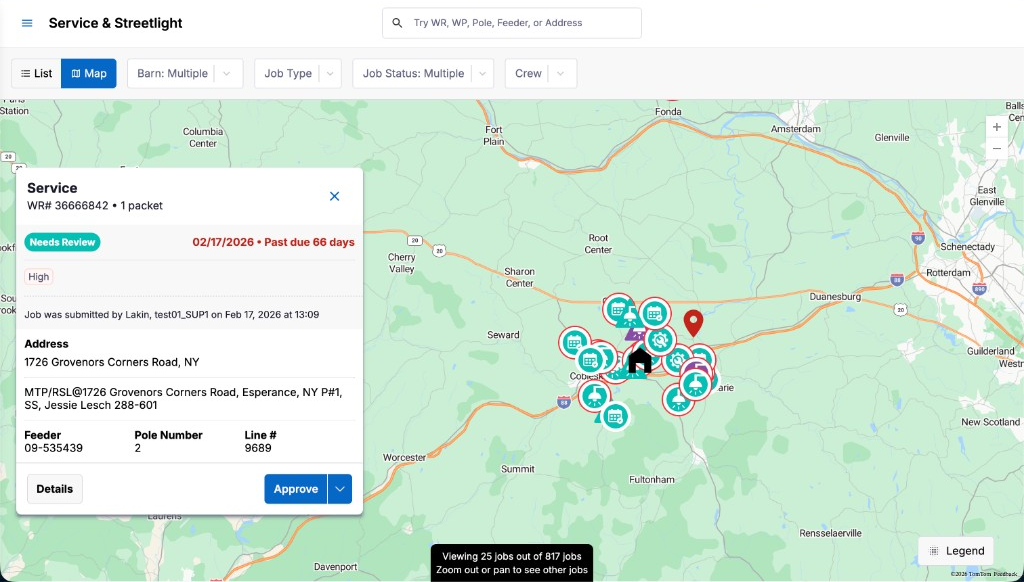
Move-in connect is still mostly trucks and scheduling (~7 days). RCD targets under 24 hours for eligible premises, without weakening safety, audit, or cross-system truth.
Principal Product Manager
I spent years shipping commerce programs and migrations—catalog complexity, launch risk, and keeping integrations honest. After that I owned growth, replatforms, and hardware-heavy DTC when the business could not afford a slip. Today I am a principal PM at National Grid on field work, metering, and workflow programs where crews, customers, and regulators all feel the outcome. What stays constant: vague mandates get turned into shipped product with numbers attached.
If you are hiring me, you are hiring judgment under pressure, moving comfortably between analytics and what is happening in the field, and the stamina to keep engineering, vendors, and go-to-market pointed in one direction when incentives disagree. I use AI in my own workflow for speed; in the product only when there is a clear use case, a way to evaluate it, and a credible path to production. Below: the headline metrics, then the stories, then how I actually run programs.
I was among the first 0.1% of ChatGPT users worldwide. Day to day I use ChatGPT for deep research, Perplexity when I want answers with citations, Claude for writing and formatted docs, Gemini for video, Bolt for quick UI prototypes, Supabase for database and backend patterns, and other tools when needed—the same habits at work and on side projects.
Tip: press ⌘K or Ctrl+K or use the search icon (top right) to open any page, case study, LinkedIn, or the resume PDF.
At a glance
Where I do my best work, plus a few headline signals: tenure, lifecycle impact, programs shipped, and migrations led.
Where I work best
By the numbers
Tenure
10+ yrs
Lifecycle impact
$10M+
Commerce shipped
30+
Platform migrations
12+
AI & NLP
Same habit everywhere: learn fast, commit carefully. I pick the tool for the job, treat model output like any other source that needs checking, and use it to speed up research, specs, prototypes, and small backends without skipping review.
Long reads and deep research—new topics, technical docs, homework on competitors and markets—with review before anything ships.
Short answers with citations and links when I need sources I can open and verify.
Long documents, edits, and formatted writeups when structure and tone need to stay consistent.
Video: summaries, questions about specific moments, and working through clips or screen recordings.
Quick UI mockups and clickable flows before engineering spends time on the full build.
Postgres, auth, and API setup when a real backend is better than a static mock.
The vendors and models will keep changing; the rule does not. I run the same review pass on work and personal projects, because what ships has to hold up.
Proof
Commerce velocity, growth under pressure, and utility-scale operations only matter if they show up in results. Here are the headline numbers behind what you just read.
Tenure
10+ yrs
A decade and change from high-volume commerce delivery to principal ownership at a Fortune 500 utility.
Lifecycle impact
$10M+
National Grid digitized workflow program: average work close from 77 days down to about 1.5 days, plus major lifecycle savings.
Commerce shipped
30+
Agency and DTC years in one number: storefronts and marketplaces on Shopify, BigCommerce, and headless stacks—with conversion and SEO on the line.
Platform migrations
12+
End-to-end migrations I led: proof I can modernize revenue-critical infrastructure without treating migration risk as someone else’s problem.
Case studies
The metrics are the summary; the case studies are the walkthrough—what was wrong or urgent, what we tried, what shipped, and what changed for the business and for customers.

Case study
National Grid
Move-in connect is still mostly trucks and scheduling (~7 days). RCD targets under 24 hours for eligible premises, without weakening safety, audit, or cross-system truth.

Case study
National Grid
Cut work-close time from weeks to ~1.5 days and capture $10M+ lifecycle savings—compliant across states and vendors.

Case study
National Grid
One reliable digital picture for crews and dispatch during storms: maps, structured status, and closeout—wired to outage systems and customer comms.

Case study
Sleepme Inc. ($50M+ revenue)
Credible marketplace + rebuilt storefront before summer peak while supply chaos made inventory and merchandising volatile.

Case study
ChiliSleep (Sleepme Inc.)
Replace a slow legacy site, launch the new brand, and protect organic search—in under five months without dropping revenue.

Case study
Oblong Inc.
Prove a new interaction model on a four-month clock, with ML assists enterprises could trust.

Case study
IntuitSolutions (Elite BigCommerce partner)
Ship trustworthy BigCommerce storefronts when fitment, search, third-party apps, and B2B rules all have to work together.
How I operate
Whatever the industry, the rhythm looks similar: fuzzy mandate to aligned execution to an honest scoreboard. Here is how I run it.
I start by pinning the job to be done, what “done” looks like, and what we will not trade away—so we do not fund the wrong roadmap while the calendar burns.
Then I pressure-test the plan with research, analytics, and plain-language risk thinking—so surprises show up in planning, not on launch weekend or in the middle of a storm.
I turn ambiguity into language everyone can repeat: what we know, what we are betting on, what we still need to validate, and what happens next.
I put cost, scope, reliability, and stakeholder impact in one conversation so executives choose on purpose, not by accident in a status meeting.
I tie execution to operational and business metrics, watch leading indicators, and reset the plan when reality diverges—whether we are counting days, dollars, or conversion.
I use LLMs to speed up research, specs, and prototyping, then harden with acceptance tests, human review, and monitoring—so fast does not become fragile for operators or customers.
Decisions
Once a program is moving, I care most about decision quality—the gap between looking busy and actually moving the number. I pull in research, usage and revenue signals, and field context, and pressure-test assumptions early while changing course is still cheap.
Artifacts
Good judgment has to live outside my head. These are the kinds of artifacts I build with teams so intent survives engineering, vendors, and launch week—so when the room gets loud, the story does not fall apart.
Requirements
Problem statements, acceptance criteria, and dependencies tied to customer and business outcomes.
AI delivery
System and task prompts, tool limits, golden examples, and change logs so AI-assisted workflows stay reviewable on the way to production.
AI delivery
Scorecards, regression checks, pilot groups, and monitoring triggers so “works in demo” becomes dependable in the field.
Strategy
Now, next, and later views anchored on bets, constraints, and measurable signals.
Prioritization
Scoring models that make cost of delay and risk visible to stakeholders.
Operations
Current- and future-state flows with controls, handoffs, and exception paths.
Rollout
Phased adoption, training hooks, and success metrics by cohort or region.
Alignment
Decision memos, office hours, and exec-ready briefs so alignment does not fall apart at the sign-off line.
Decision quality
What options were considered, what we chose, and what evidence would change the call.
Measurement
Leading and lagging indicators tied to business and operational KPIs.
Architecture
Diagrams that clarify ownership, contracts, and migration risk.
Together
Strong deliverables still fail if people are not aligned. On the programs I lead, I treat the grid below as how work really happens—engineering, design, operations, vendors, marketing, and leadership—so constraints stay visible, handoffs have owners, and the roadmap matches business and regulatory reality.
Align platforms, integrations, and modernization with a cutover story people believe
Partner on feasibility, sequencing, and honest delivery risk
Push for workflows operators can run under real pressure, not only mockups
Ground roadmaps in field reality, SLAs, and process change
Set joint accountability so partner roadmaps match customer dates
Earn alignment on bets, funding, and risk appetite before commitment
Translate non-negotiables into product choices teams can build
Choose augment vs automate, data rules, and operator-safe behavior
About
If the hero and metrics resonated, this is the same person with more room to breathe: I am strongest when the problem is fuzzy but the stakes are clear—lots of teams, vendors, and deadlines, and one definition of success. I ground calls in what operators and customers actually experience, in analytics and reporting where they exist, and in tradeoffs everyone can repeat out loud. For AI that means intent, measurement, and rollout discipline so pilots turn into something people rely on. The About page has philosophy, where I am best brought in, and how each chapter of my career fed the next.